
How To Be Good In Bed
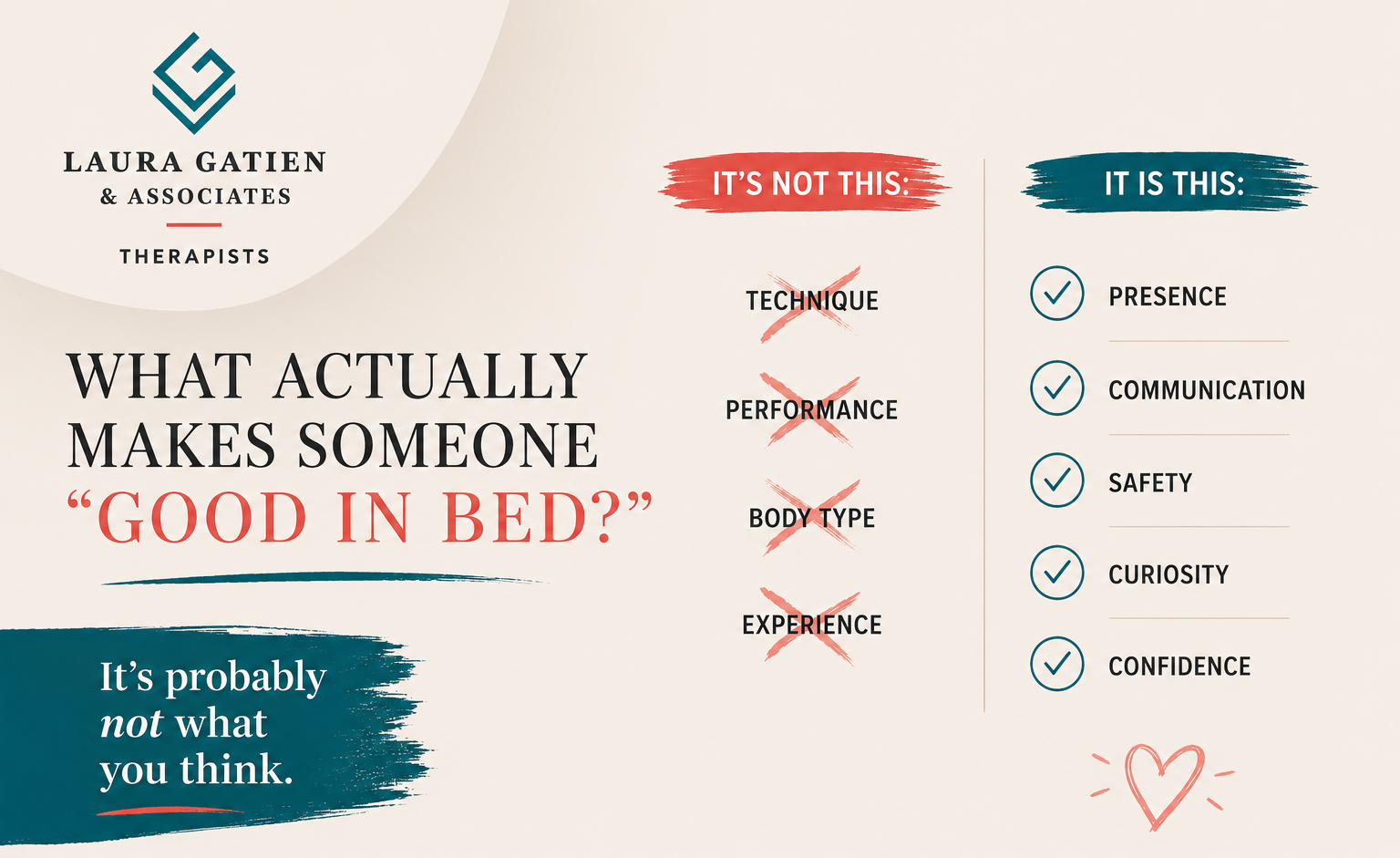
Recently, I overheard a group of people talking about being “good in bed.” It sounded confident...almost competitive; who had the most experience, who knew the most.
All I could think was: this is exactly why so many people are having disconnected sex.
It took everything in me not to jump into the conversation. But if I had, here’s what I would have said.
Being Good in bed starts with safety
This means consent and respecting boundaries. Because when someone feels safe, their body can relax. And when the body relaxes, pleasure becomes possible.
Pay attention
Your partner’s body is constantly communicating. If you’re not tuned in, if you’re in your head trying to “do it right”, you’re missing everything that actually matters.
Say what feels good
Silence doesn’t make sex better. Clarity does.
Simple, real-time feedback like “yes,” “slower,” or “right there” is what creates better experiences for both of you.
Slow down
Rushing is usually anxiety in disguise. Taking your time builds connection, trust and anticipation. That’s where the good stuff lives.
Handle insecurities with care
Everyone brings vulnerability into the bedroom. A genuine compliment or reassurance can completely shift someone’s ability to be present. Don’t underestimate that.
Talk about what you like
I always tell my clients, your partner cannot read your mind. If you want better sex, you need better conversations.
Focus on giving, not performing
When you’re focused on how you look or whether you’re “doing it right,” you’re disconnected. Great sex is not a performance. It’s a shared experience.
Stay open (within your boundaries)
Being open to exploring, while staying grounded in your limits, is what keeps intimacy alive and evolving.
Say the thing
Tell your partner they’re attractive. Tell them you love what they’re doing. People don’t hear this enough, and it matters more than you think.
Being "good in bed" is about being present, attuned and connected. And when you get that right, everything else tends to take care of itself.