Stop Calling Everyone a Narcissist—You’re Missing the Real Problem
“Narcissist” has become the go-to name for difficult, hurtful or controlling people. For people who can’t see their role in a situation. I hear it all the time….
Partner won’t take accountability? Narcissist.
Boss is manipulative? Narcissist.
Ex was emotionally abusive? Narcissist.
It feels validating and it gives language to pain. But it’s often inaccurate—and more importantly, it can actually get in the way of accountability and empowerment.
Narcissistic Personality Disorder is a clinical diagnosis. It requires assessment over time and professional evaluation. Most people using the term aren’t diagnosing—they’re describing behaviour. And behaviour is what actually matters.
When we jump to labelling someone a narcissist, we risk missing what’s really happening. Because sometimes it’s not narcissism. Sometimes it’s power and control, entitlement, emotional immaturity, avoidance of responsibility or simply someone choosing not to care about their impact.
And those things don’t require a diagnosis to be real. They require boundaries and consequences.
There’s another cost here that doesn’t get talked about enough: it disempowers everyone involved. We stop holding behaviour accountable and start explaining it; explanation is not accountability.
You don’t need a diagnosis to say:
This is controlling.
This is not respectful.
I won’t accept this.
That’s where real empowerment lives—naming behaviour, understanding impact and choosing your response.
Because whether it’s narcissism or not, the impact is still the impact. If they control you, call it control. If they repeatedly cross boundaries, call it a boundary violation. Clarity creates accountability. Labels often create distance.
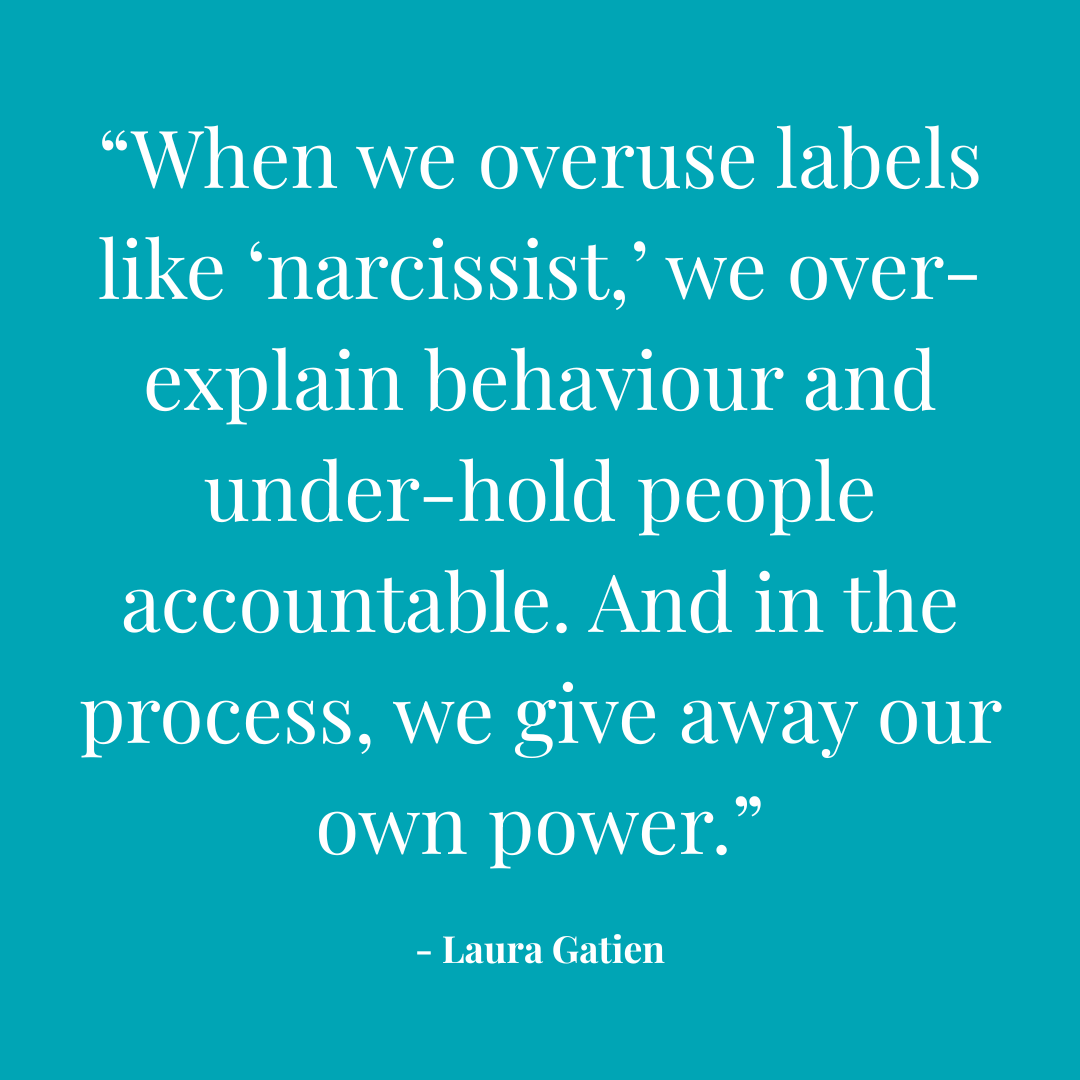
The truth is, not everything harmful is pathology (aka a “disorder”). Sometimes it’s a choice. And that’s uncomfortable—because if it’s a choice, then they could do differently, and you may need to respond differently too. But that’s also where your power is. When we overuse labels like “narcissist,” we over-explain behaviour and under-hold people accountable. And in the process, we give away our own power.
So instead of trying to diagnose from a distance, focus on what actually matters: What is happening? What is the impact? And what am I going to do about it?
If you’re in a relationship or dynamic that feels confusing, overwhelming or hard to navigate, you don’t have to figure it out alone.
Our therapists focus on helping you understand patterns, set boundaries and respond in ways that actually support your well-being—without needing to label or diagnose the other person.
Book an appointment today and start getting clarity on what’s happening and what you can do next.